If you manage procurement, sourcing, or procurement operations, you know how quickly a supplier contract can become a cross-functional task. A single agreement can pass through 5 teams and 3 approval stages, with legal review happening over email, stakeholders chasing updates, and supplier redlines coming back in multiple rounds.
The process gets fragmented, timelines stretch, and nobody has a clear view of what needs attention at each stage.
Even post-signature, the contract closes the deal, not the workload. You still need to monitor pricing, manage obligations, catch renewals, and hold suppliers to their commitments long after the ink is dry.
Procurement contract management software can automate these repetitive tasks, connect the work across teams, and give you visibility from intake through renewal.
But choosing the wrong software can leave you with another tool to manage, the same manual work to chase, and gaps between procurement, legal, finance, and suppliers. You may automate contract storage or approvals while still handling other parts of the process through email and spreadsheets.
To help you pick the right software, this article provides the 7 best procurement contract management software in 2026.
The list includes platforms that help you manage supplier contracts through approvals, renewal tracking, and workflow management, plus Aline, an AI-first platform that goes further with agentic intake, playbook-driven workflows, and automated processes across your entire contract lifecycle.
We've compared all the tools in terms of features, benefits, best-fit use case, and pricing so you can quickly see which platforms make the cut for your shortlist.
The wrong procurement contract management software can look right on paper. You see contract storage, approvals, e-signatures, reporting, and AI, so the shortlist looks solid.
Then you start using it and realize you bought a broader procurement suite when you just needed contract storage, or a traditional CLM when your team needed faster intake and review.
Your starting point should be the work you need the software to handle. Use the table below to narrow down the type of platform that fits your procurement process.
| If your main need is... | What that means | Best-fit tools |
|---|---|---|
| AI-powered contract review and redlining | You need to review supplier agreements against procurement playbooks, flag deviations, and speed up negotiations. | Aline, Ironclad |
| End-to-end contract lifecycle management | You need structured workflows covering drafting, review, approvals, signing, storage, and post-signature management. | Aline, Ironclad, Icertis, DocuSign CLM |
| Procurement and spend management in the same platform | You need contracts connected to sourcing, purchasing, supplier management, invoicing, and spend processes. | SAP Ariba Contracts, Coupa |
| Supplier and vendor management | You need to manage supplier onboarding, supplier information, contracts, renewals, and vendor-related workflows. | Gatekeeper, Coupa |
| Contract management with integrated e-signature | You want signing built directly into the contracting process without moving agreements between separate tools. | Aline, DocuSign CLM |
The best procurement contract management platform should give you a clear way to manage supplier agreements as efficiently as possible. Here are seven tools worth looking at:
Need the short version? Here's how the seven platforms stack up.
| Platform | Core strength | Limitations | Pricing | Implementation |
|---|---|---|---|---|
| Aline | AI-first approach, playbook enforcement, workflows, repository, reporting, and native e-signature | Not ideal for teams managing fewer than 20 contracts/month with little cross-functional review | From $200/user/month | 3-4 days |
| Icertis | Governance, compliance, supplier contracts, and enterprise integrations | Requires a strong internal or implementation team; not suited to teams wanting a lightweight CLM | $100,000-$300,000+/year estimated | 6 months |
| SAP Ariba Contracts | Source-to-pay integration, compliance, spend visibility, and contract management | Less suitable for occasional users or teams needing highly flexible reporting | Around $200,000/year estimated for CLM | 3-4 months for focused deployments |
| Coupa Contract Management | Connecting contracts with purchasing, suppliers, invoices, and spend | Less suitable for teams needing extensive customization or small businesses with simple procurement needs | $50,000-$250,000/year estimated for mid-market deployments | 6 months |
| Gatekeeper | Vendor management, workflow automation, renewals, obligations, and permissions | Less suitable for teams needing deep customization or those with simple contracting processes | From $1,245/month; Enterprise at $5,295/month based on third-party estimates | 4 months |
| Ironclad | Configurable workflows, AI-assisted review, contract data, and clause management | Search, reporting, integrations, and administrative configuration can be limiting | $40,055/year median; $15,000-$105,191+ reported | 4 months |
| DocuSign CLM | Contract workflows, e-signature, integrations, and agreement intelligence | Less suitable if you need extensive customization, simple setup, or smooth procurement integrations | $20,000-$60,000/year estimated for small deployments | 3 months |
Aline is built for the reality of supplier contracting: the supplier's agreement comes in first, and your procurement standards guide what happens next.
With Aline, you can run incoming vendor contracts against your procurement playbooks, flag deviations from your preferred terms, and route exceptions to the right reviewers. You can also keep the review moving in the same workflow, with negotiation and approvals connected.
That gives you a contract process shaped around how procurement actually handles supplier agreements, not just a CLM with procurement features added on.
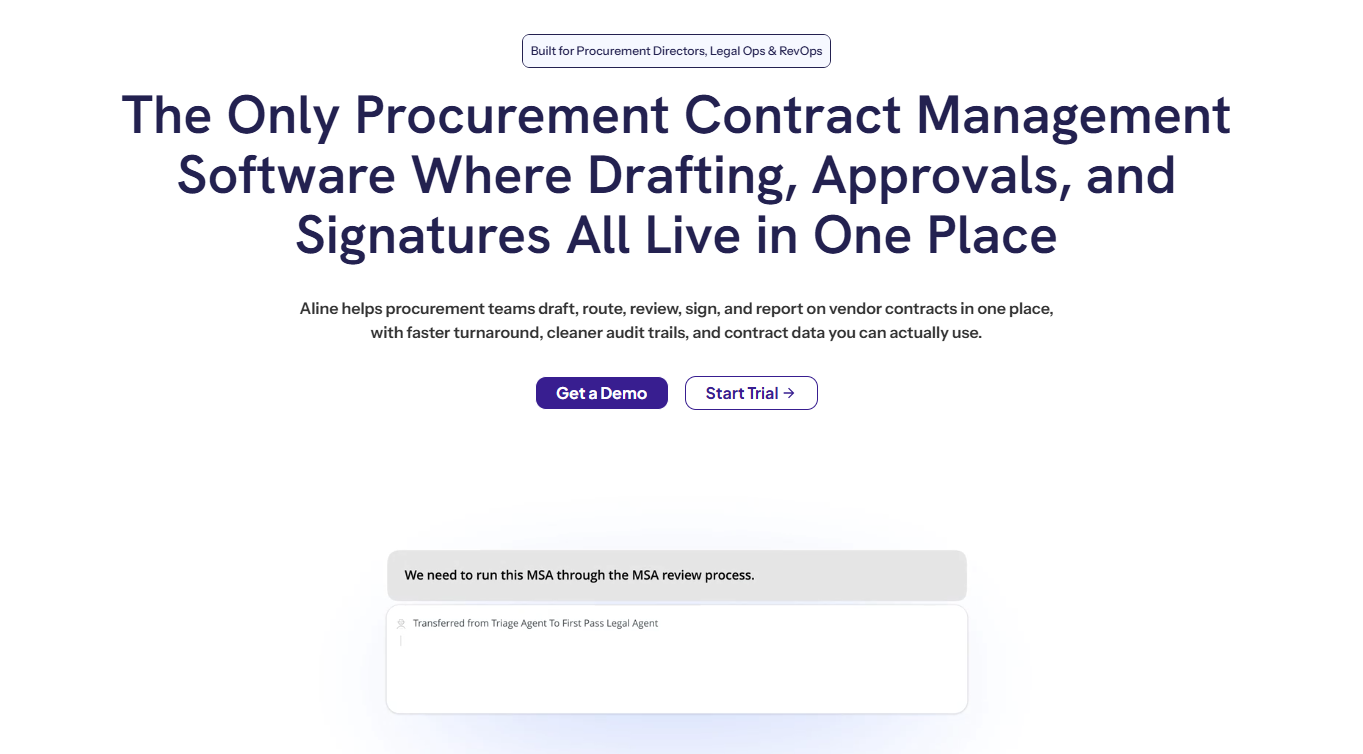
Aline's AI architecture runs Claude, ChatGPT, and Gemini in parallel, cross-checking their outputs instead of relying on a single model for every contract task. This cross-check reduces the risk of model-specific hallucinations and delivers more reliable contract analysis. The multi-model setup also helps you draft, negotiate, and close contracts 50-75% faster.
Aline also applies this procurement workflow before and after contract review. At intake, it checks existing workflows for requests such as supplier NDAs, DPAs, and vendor agreements, then searches existing work to avoid duplicate requests.
From there, it routes the request to the appropriate workflow and stakeholders, responds in-channel, and logs each event in an auditable activity timeline.
After signature, you can extract payment terms, renewal dates, SLAs, liability caps, and other supplier obligations from signed agreements, giving you structured data for ongoing procurement work.
What was Offerd trying to fix? Offerd was managing customer and contractor agreements through DocuSign, but broad contract access meant sales reps could see agreements outside their own deals. The team also spent time categorizing and filing contracts after signature.
How did Aline change the workflow? Offerd moved its agreement workflows into Aline, allowing sales reps to generate the right Platform Agreement, send it for customer redlines and comments, and route the final version for signature. Signed agreements are automatically stored in Aline's repository with access controls that limit reps to the contracts they handle.
What changed for Offerd? Offerd saved $18K in subscription costs by replacing its separate e-signature tool, while improving contract access controls and keeping agreements organized from creation through signature and storage. The company is now looking to extend the workflow to employment agreements and NDAs.
$18K
Saved in subscription costs by consolidating a separate e-signature tool into Aline
Offerd
We were paying for too many tools that handled pieces of the same process. Aline helped us consolidate that spend and saved money from unnecessary software subscriptions and streamlined contract workflows.
David Luebke, Procurement and Operations at Offerd
Implementation time: 3-4 days for most teams to become operational; less than a week overall.
Try it today and see it firsthand!
Icertis is an enterprise contract management system built for companies that need tighter control over supplier agreements, compliance, and post-signature contract visibility.
In procurement, it is geared less toward lightweight document handling and more toward structured source-to-contract work, with a big focus on supplier relationships, spend control, risk, and connected business data.
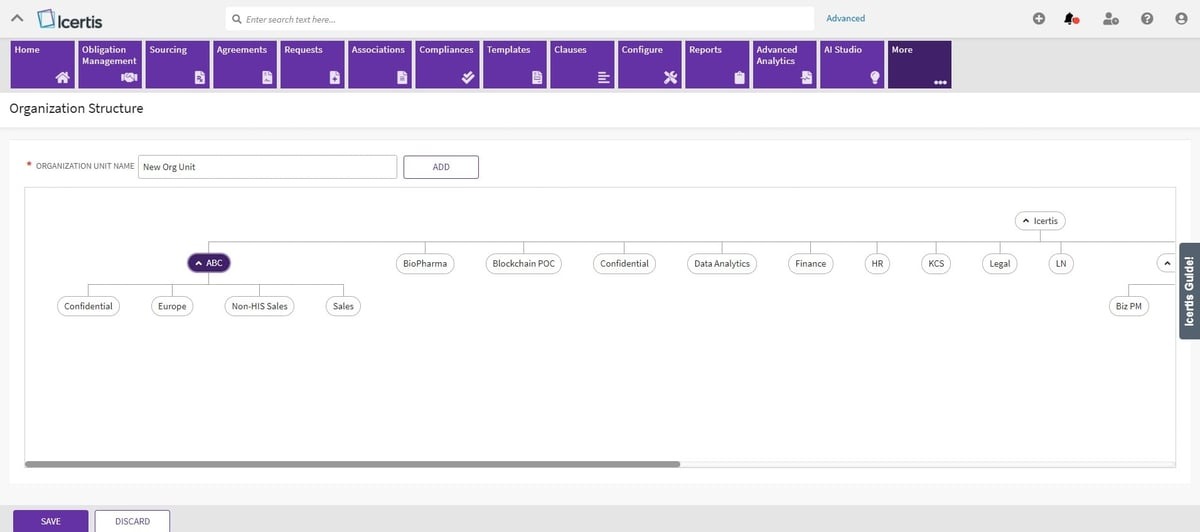
If your process pulls in procurement, finance, operations, sales teams, and in-house legal teams, Icertis has the depth to support that kind of setup.
The platform is positioned around contract intelligence, which means it treats contracts as connected business records rather than simple document storage.
That connectivity is useful when your team needs to track obligations, flag contract risk, support contract negotiations, and tie supplier terms back to wider procurement workflows.
Additionally, Icertis puts a lot of weight on AI-native features, business context, and integrations that connect agreements, data, and systems in a broader enterprise environment.
Custom enterprise pricing. Third-party estimates put Icertis deployments at roughly $100,000-$300,000+ annually, depending on users, contract volume, and modules. Licensing, training, implementation, and other first-year costs can push the total higher.
Implementation time: G2 mentions a typical rollout time of 6 months, with a 22-month ROI.
SAP Ariba Contracts is procurement-focused CLM software designed to manage contract creation, approvals, compliance tracking, reporting, and post-signature visibility inside the wider SAP spend ecosystem.
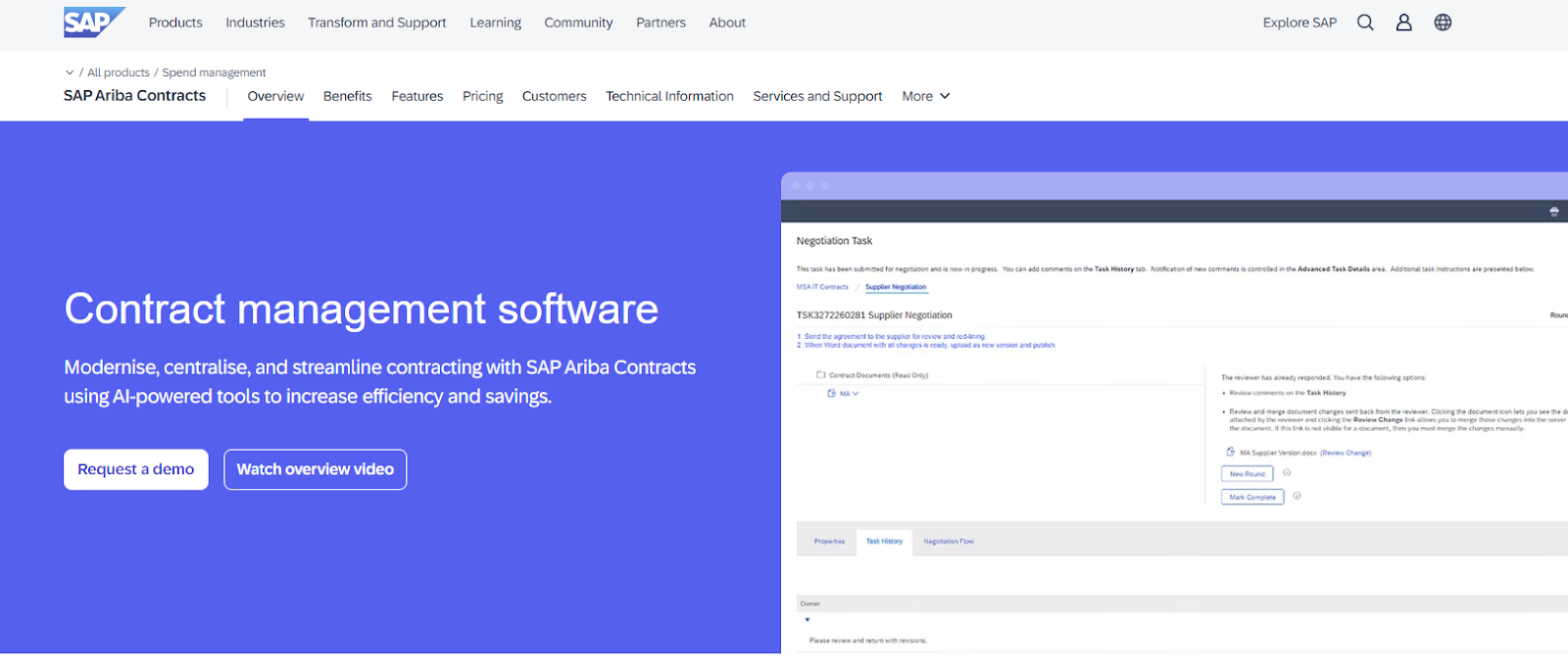
If your procurement work already sits close to SAP, this tool makes a lot of sense because contracts are tied to source-to-pay activity rather than treated like isolated files.
SAP also emphasizes operational control, with a single contract workspace, real-time monitoring of spend history and compliance, powerful search, and workflow support that helps teams keep contract processes moving with a complete audit trail.
Procurement teams can use contract management software like SAP Ariba Contracts to connect sourcing, purchasing, compliance, and reporting in one environment, which helps reduce risk exposure and spot missed value earlier.
Custom, quote-based pricing. SAP Ariba Contracts is priced per user per month, with 3- to 36-month contract terms. Third-party estimates put the CLM module at around $200,000/year, though actual costs vary by deployment.
Implementation time: A focused SAP Ariba deployment can take 3-4 months, while a broader implementation can take 9-12 months.
Coupa Contract Management connects contracts with sourcing, purchasing, supplier activity, and spend management, which is a big reason procurement teams consider it in the first place.
You are not only storing agreements or sending them for approval. Instead, you are tying negotiated pricing, supplier terms, and contract data back to the buying process so procurement can get more value from the work after signature.
For companies already using Coupa, that can also mean faster time to value because contracts sit inside the same wider procurement environment.
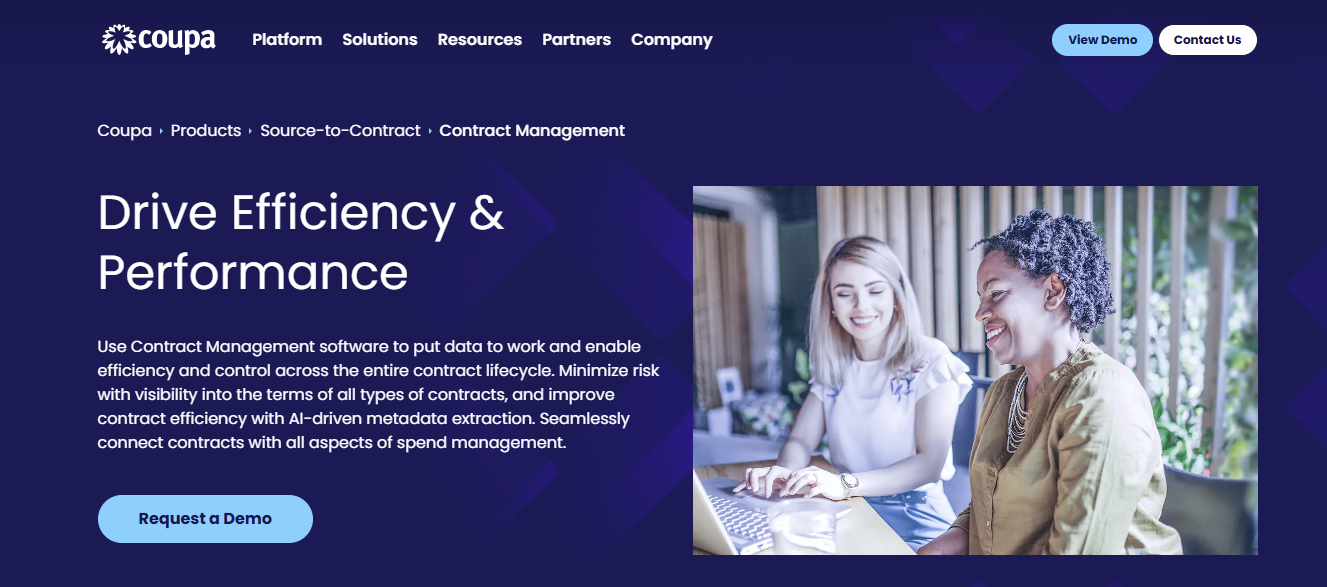
Coupa treats contracts as part of procurement operations and not as a separate legal archive. The platform highlights AI-driven metadata extraction, visibility into the terms of all contract types, and links to spend management, which gives procurement teams a better shot at spotting missed value and using approved supplier terms more consistently.
Coupa also supports collaboration on third-party contracts, version history, and supplier-side review, so contract review can move with more structure when outside paper comes in.
No public pricing available. Third-party estimates put Coupa subscriptions at roughly $50,000-$250,000/year for mid-market deployments, with large enterprise deployments reaching $800,000+ annually depending on your business needs.
Implementation time: Coupa takes around 6 months to roll out.
Gatekeeper is a contract and vendor management platform that gives procurement teams a central place to handle supplier records, contracts, renewals, risk checks, and workflow steps together.
That mix is a big part of its appeal. Procurement rarely needs a CLM tool for document storage alone. You also need visibility into key dates, notice periods, obligations, approvals, and supplier status after the contract is signed.
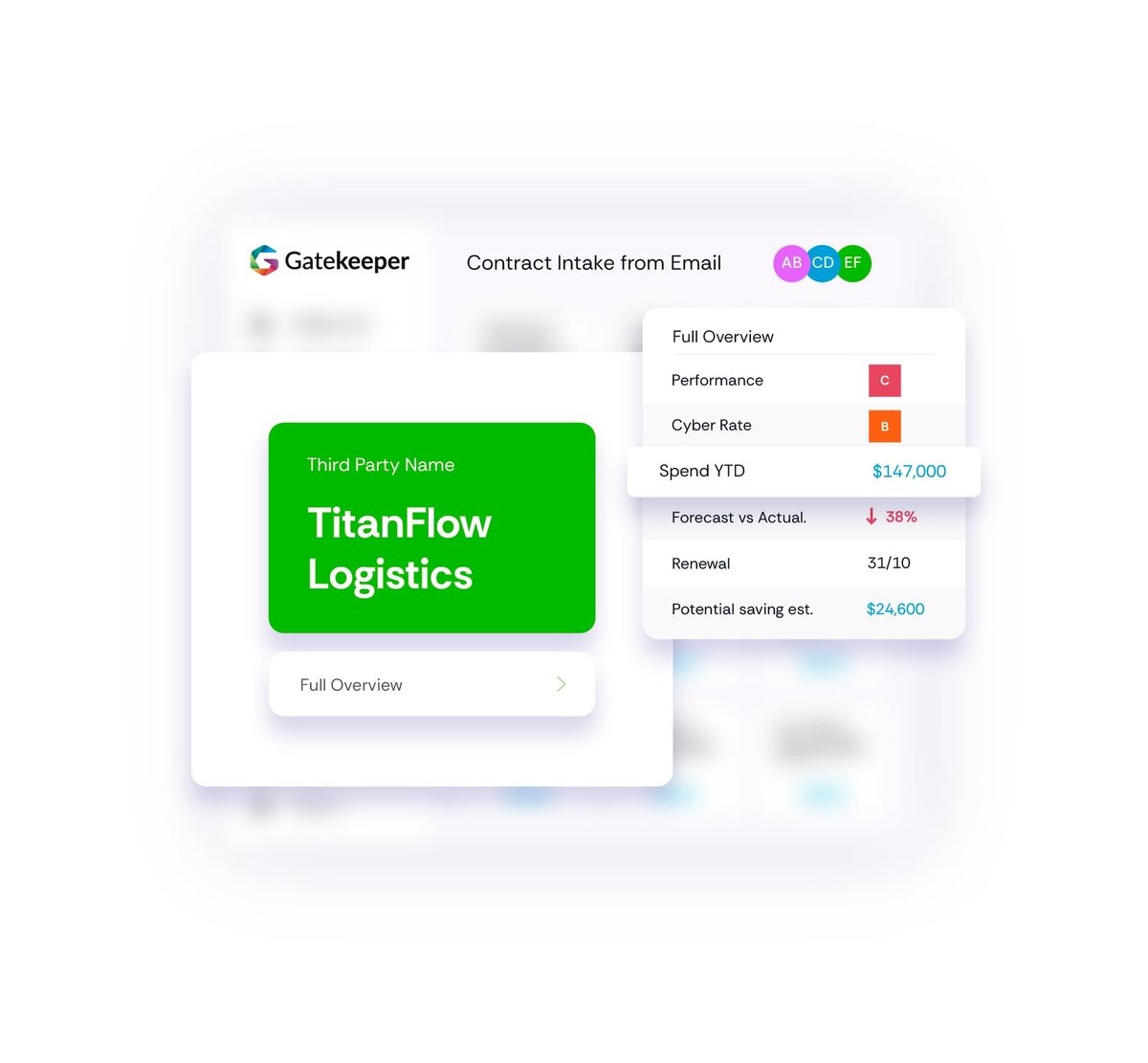
Gatekeeper leans into that broader procurement view by linking contracts to vendor records, spend controls, onboarding, and compliance activity in one system.
It also supports the entire contract lifecycle, from intake and sign-off through renewal management and closeout, with contract automation aimed at cutting manual admin and keeping work moving.
Another reason procurement teams look at Gatekeeper is control. The platform supports complex workflows, configurable phase access, approvals, conditional owners, SLA timers, and automated reminders tied to contract events.
These features give you a more structured process to approve contracts, track obligations, and stay ahead of renewals or review cycles that can easily get missed in a more basic setup.
Gatekeeper does not publicly list its subscription rates. Third-party estimates place the starting price at $1,245/month and $5,295/month for Enterprise, billed annually.
Implementation time: G2 mentions an average implementation time of around 4 months, with a 15-month ROI.
Ironclad is a contract lifecycle management platform for creating agreements, routing approvals, reviewing third-party paper, storing signed contracts, and reporting on contract data in one system.
It works well for procurement teams that need legal and finance teams in the process, but still want business users to move requests forward without getting stuck.

Ironclad offers AI-assisted contract drafting, review, and post-signature visibility. Procurement teams can use it to generate contracts, review vendor paper, extract structured data, track renewals, and search key terms later.
The platform also includes a clause library, which helps teams keep fallback language and approved terms easier to manage during review.
Does not have transparent pricing. Third-party purchasing data from Vendr puts median customer spend at around $40,000/year, with reported deals ranging from $15,000 to $105,191. This cost excludes the implementation pricing.
Implementation time: Expect around 4 months to implement Ironclad, with an average 13-month ROI.
DocuSign CLM is a contract lifecycle management platform that handles document generation, workflow routing, approvals, storage, and post-signature tracking.
For procurement teams, the main draw is that you can create supplier agreements, ingest third-party paper, route work through reviews, and keep an eye on upcoming deadlines from a system a lot of teams already know.
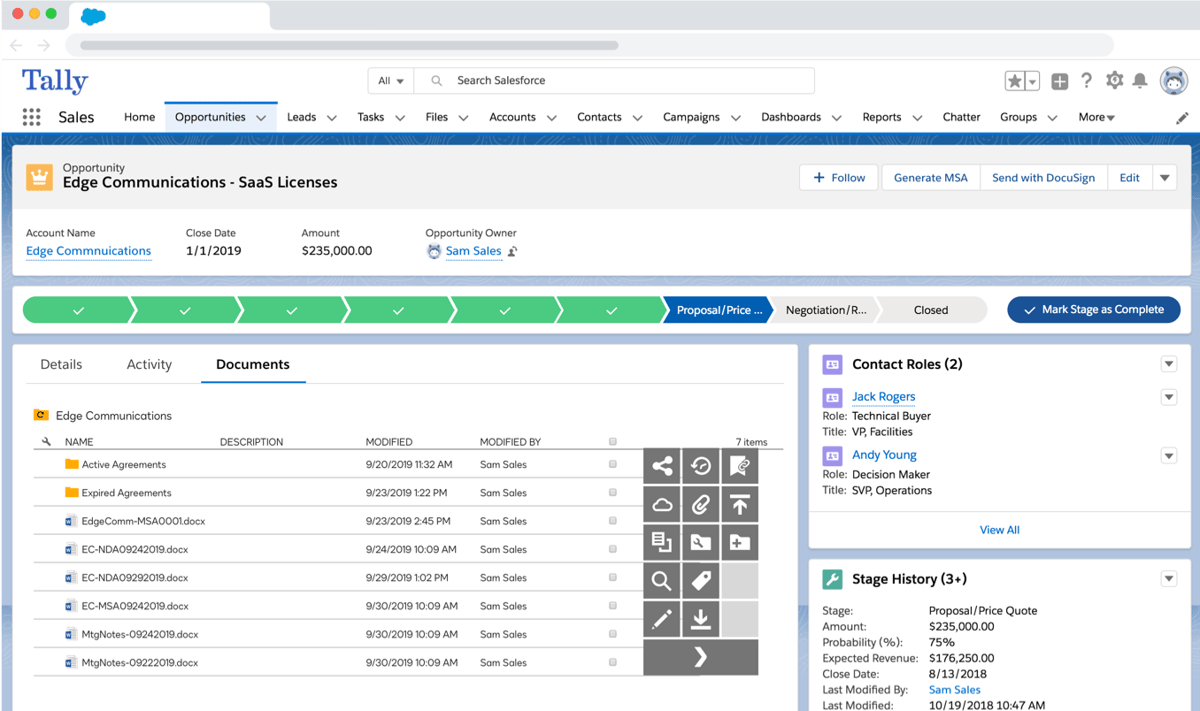
DocuSign connects CLM with tools like SAP Ariba, Coupa, Salesforce, and Workday, which makes it easier to keep contract work tied to the rest of the business instead of treating it like a side process.
Plus, DocuSign CLM uses AI workflows to surface contract metadata, which cuts down on manual data entry and makes agreements easier to search, report on, and manage later.
DocuSign has also been expanding its AI layer with contract agents in IAM, though those AI agent experiences sit in the wider DocuSign agreement platform rather than CLM alone.
Pricing is tailored to each deployment, with no fixed rates listed publicly. Third-party data from Vendr estimates DocuSign CLM at roughly $20,000-$60,000/year for small deployments, $60,000-$200,000 for mid-market deployments, and $200,000-$500,000+ for enterprise deployments.
Implementation time: Implementation typically takes 3 months, and the average ROI comes in at 13 months.
You don't need Aline for every procurement operation. Your priorities should drive the choice:
Each of these platforms solves a different procurement need. The bigger question is whether your contract intelligence connects to the work that follows. Intelligence you can't act on is just a better filing cabinet.

Aline puts that intelligence into the workflow. You can capture contract requests through intake, route them to the right stakeholders, and review supplier paper against your playbooks. From there, you can negotiate, sign, and pull payment terms, renewals, SLAs, and other obligations from the executed agreement.
You get that AI-rich workflow without a long rollout. Most teams are operational in 3-4 days, using their existing templates, workflows, contracts, and approval paths. Aline also keeps pricing transparent (at $200 for 10 users per month), so you can compare the cost against the other CLMs on your shortlist.
What changed after Aline:
Aline has saved me hundreds of hours analyzing thousands of contracts over the last year. The platform is intuitive, and we were able to start getting value without a long ramp-up.
Larissa Pimentel, Sr. Legal Advisor at Sophos
We needed to identify a specific notification window across all contracts. One query returned accurate results in seconds. That level of speed and confidence is a game-changer for operational response.
Glenn Cionek, RevOps at Wallarm

Put Aline to work before you commit. Book a demo and test it on an anonymized contract with our team. Or start a free trial and experience the platform's contract workflows firsthand.
Procurement contract management software helps your team create, review, approve, sign, store, and track supplier agreements in one place. It also helps you keep up with renewals, obligations, approval history, and contract data that would be harder to manage in email threads or shared folders.
Start with your process. Look at who needs to be involved, how many contracts you handle, how complex your approval flow is, and how much reporting you need after signature. It also helps to check for AI features, repository search, integrations, and any implementation services offered if your team wants extra support during setup.
They can be, especially for review, redlining, search, and reporting. Some platforms use natural language processing and other AI tools to pull key terms from contracts, flag risky language, summarize agreements, or help teams find clauses faster. The real value depends on how well those features fit your workflow.
It helps to look at usability, permissions, reporting depth, integrations, and how well the system can grow with your team. You may also want to ask about ongoing maintenance, storage limits, or unlimited storage, and how easy the platform will be to keep current as your process changes, so your setup stays future-proof.